When it comes to raising a healthy kitten, we can’t overlook the importance of proper nutrition. Kittens need a balanced diet rich in six essential nutrients: proteins, fats, vitamins, minerals, water, and carbohydrates. Proteins are critical for growth and development, while fats provide energy and aid in nutrient absorption. Vitamins and minerals support various bodily functions, including bone strength and immune health. Taurine, an essential amino acid, is fundamental for heart and vision development. Adequate hydration through water intake is also key. Finally, carbohydrates offer digestible energy sources. Let’s explore each of these nutrients in more detail to guarantee our furry friends thrive.
Key Takeaways
- Protein (35-50% of diet) is crucial for muscle, tissue, and organ development in kittens.
- Essential fatty acids support brain development, skin health, and aid in fat-soluble vitamin absorption.
- Vitamins, especially A and D, are vital for vision, skin health, and calcium absorption in growing kittens.
- Minerals like calcium and phosphorus are essential for strong bones and teeth development.
- Adequate hydration through constant access to fresh water is crucial for nutrient absorption and metabolic processes.
Protein: Building Blocks for Growth
You may be interested

Kittens’ rapid growth demands a protein-packed diet. We can’t stress enough how important protein is for these tiny furballs. It’s the building block for their muscles, tissues, and organs, fueling their healthy development at breakneck speed. Kittens need a whopping 35-50% protein in their diet, with at least 9% coming from animal sources to meet their nutritional needs.
But it’s not just about quantity; quality matters too. Essential amino acids, like arginine and lysine, play critical roles in various body functions. These protein powerhouses support immune response and energy production, ensuring our little ones grow up strong and frisky. To keep our kittens on track, we’ve got to monitor their growth and weight regularly. This way, we’re making sure they’re getting enough protein for healthy growth without risking obesity down the road.
Recommended Products


The Enhanced Bland Diet for cats: Complete and optimal recovery food for cats of all life stages with easy-to-digest ingredients

Calming Support Supplement: Vetoquinol Zylkene is a calming supplement for large cats and medium dogs that uses alpha-casozepine from milk protein to support calm behavior during loud noise, celebrations, traveling, and other challenging situations
Fats: Energy and Nutrient Absorption
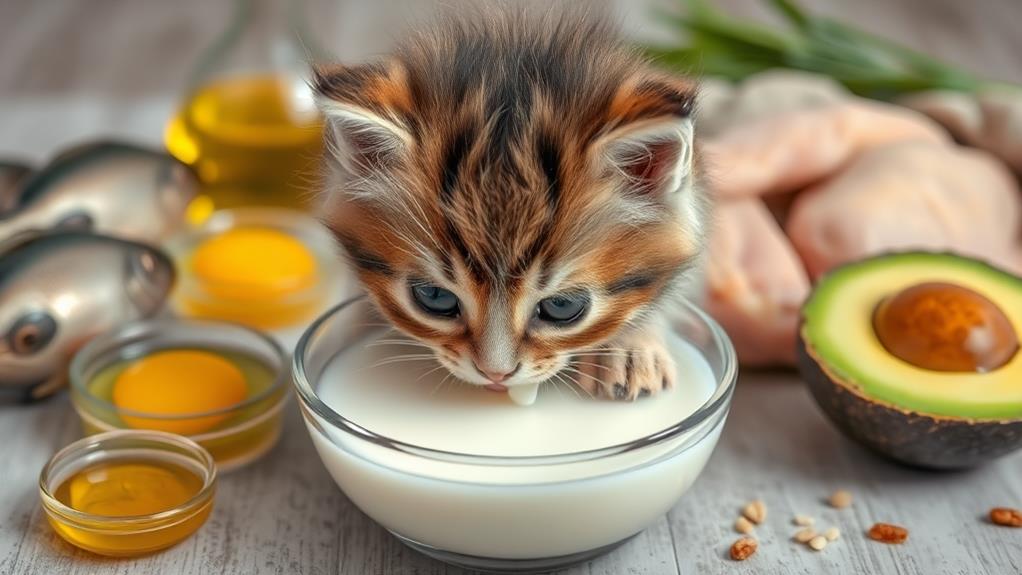
Let’s explore two important aspects of fats in a kitten’s diet: essential fatty acids and fat-soluble vitamin absorption. Essential fatty acids, like omega-3 and omega-6, are fundamental for your kitten’s skin health, coat quality, and overall cellular function, which we’ll discuss in more detail shortly. We’ll also examine how fats play a key role in helping your kitten absorb fat-soluble vitamins A, D, E, and K, which are necessary for various bodily functions and overall health.
Recommended Products

IMMUNE SUPPORT. This Advanced Immune Restoration Program improves the entire range of feline health.

Cat/Dog Skin and Coat Supplement: Relieve your pet from rashes, itchy skin & hot spots with Ultra Oil’s hemp & liquid fish oil for pets. Simply pump into their meal(s) for healthy skin & fur that shimmers!
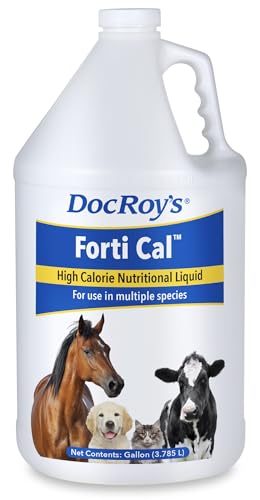
🐾 Ideal for many animals and situations! GREAT FOR - multiple species; Whether your animal is working, recovering from illness, or just a picky eater
Essential Fatty Acids
When it comes to raising a healthy kitten, essential fatty acids play a significant role in their development. These important nutrients provide a concentrated energy source, supporting rapid growth and high activity levels. We can’t stress enough the importance of a higher fat content in a kitten’s diet, typically ranging from 18-35% on a dry matter basis.
Essential fatty acids, including omega-3 and omega-6, offer numerous benefits for our feline friends:
- Enhance absorption of fat-soluble vitamins A, D, E, and K
- Maintain healthy skin and a shiny coat
- Support brain and vision development
Without sufficient intake of these fatty acids, kittens may face health issues like poor growth, skin problems, and impaired cognitive functions. By ensuring our kittens receive adequate essential fatty acids, we’re setting them up for a lifetime of health and well-being.
Fat-Soluble Vitamin Absorption
Beyond their role as an energy source, fats play an essential part in the absorption of essential fat-soluble vitamins in kittens. These vitamins, including A, D, E, and K, rely on dietary fats for proper digestion and absorption. Without adequate fat intake, our furry friends may not receive the full benefits of these vital nutrients, potentially impacting their growth and development.
Let’s break down the importance of fats for vitamin absorption:
| Vitamin | Role | Fat Requirement | Benefits |
|---|---|---|---|
| A | Vision, immune function | High | Healthy skin, coat |
| D | Bone development | Moderate | Strong skeletal system |
| E | Antioxidant | High | Cell protection |
| K | Blood clotting | Low | Proper healing |
Essential Amino Acids for Kittens
When we consider essential amino acids for kittens, we can’t overlook the significant roles of taurine and arginine. Taurine, while not typically classified as an essential amino acid for most mammals, is critical for kittens’ heart health and proper development of their vision and nervous system. Arginine’s metabolic importance can’t be overstated, as it’s essential for ammonia detoxification in kittens, preventing potentially life-threatening complications from protein metabolism.
Recommended Products

item_display_weight; 7500.0 grams

The information below is per-pack only

ADVANCED CARDIAC SUPPORT - The amino acid, taurine, helps build the proteins concentrated in the heart muscle, eyes and brain.. Perfect for the aging dog and cat, this formula can provide heart support for dogs and cats!
Taurine for Heart Health
Taurine’s role in a kitten’s heart health can’t be overstated. This essential amino acid is critical for proper cardiovascular function and overall development in our feline friends. As kittens can’t produce enough taurine on their own, it’s our responsibility to guarantee their diet includes sufficient animal protein sources rich in this essential nutrient.
We’ve identified three key reasons why taurine is indispensable for kittens:
- Supports heart muscle function and prevents dilated cardiomyopathy
- Aids in the formation of bile salts for digestion
- Regulates calcium levels in the heart
Including taurine-rich foods in a kitten’s diet is necessary to prevent deficiency and promote peak growth. We recommend aiming for about 0.1% taurine content in dry food to meet their nutritional requirements. Remember, a well-balanced diet is the foundation for a healthy, thriving kitten.
Arginine’s Metabolic Importance
While taurine is essential for heart health, arginine plays an equally important role in a kitten’s metabolic function. This essential amino acid is vital for protein synthesis and overall growth, making it a key player in your kitten’s development. We can’t stress enough how important arginine is for our feline friends, especially during their rapid growth phase.
Let’s break down arginine’s importance:
| Function | Benefit | Deficiency Risk |
|---|---|---|
| Protein Synthesis | Supports Growth | Stunted Development |
| Ammonia Detoxification | Metabolic Health | Hyperammonemia |
| Urea Production | Waste Excretion | Toxin Buildup |
| Immune Support | Disease Resistance | Weakened Immunity |
| Tissue Repair | Healing | Slow Recovery |
To guarantee your kitten gets enough arginine, focus on animal protein sources in their diet. These dietary options will help prevent deficiency and support your kitten’s journey to adulthood.
Vitamins: Catalysts for Development
Throughout a kitten’s growth journey, vitamins serve as indispensable catalysts for development. We can’t stress enough how essential these micronutrients are for supporting a kitten’s immune system and overall health. Vitamins A and D play significant roles in vision, skin health, and calcium absorption, while B vitamins fuel energy metabolism and neurological function.
Let’s break down the importance of vitamins for kittens:
- They boost the immune system, helping fend off infections
- They support proper bone growth and development
- They act as antioxidants, protecting cells from damage
As guardians of these tiny furballs, we must guarantee they receive a balanced intake of vitamins. Deficiencies can lead to serious health complications, potentially hampering their growth and development. By providing the right vitamins, we’re setting our kittens free to explore their world with strong bodies and sharp minds.
Recommended Products

Immune System Support: Supports a healthy immune system for your cat's overall wellness

Comprehensive Nutritional Support: Liqui-Tinic 4X is a liquid iron and vitamin B12 pet supplement that helps address deficiency in cattle, swine and horses
Minerals: Strengthening Bones and Teeth
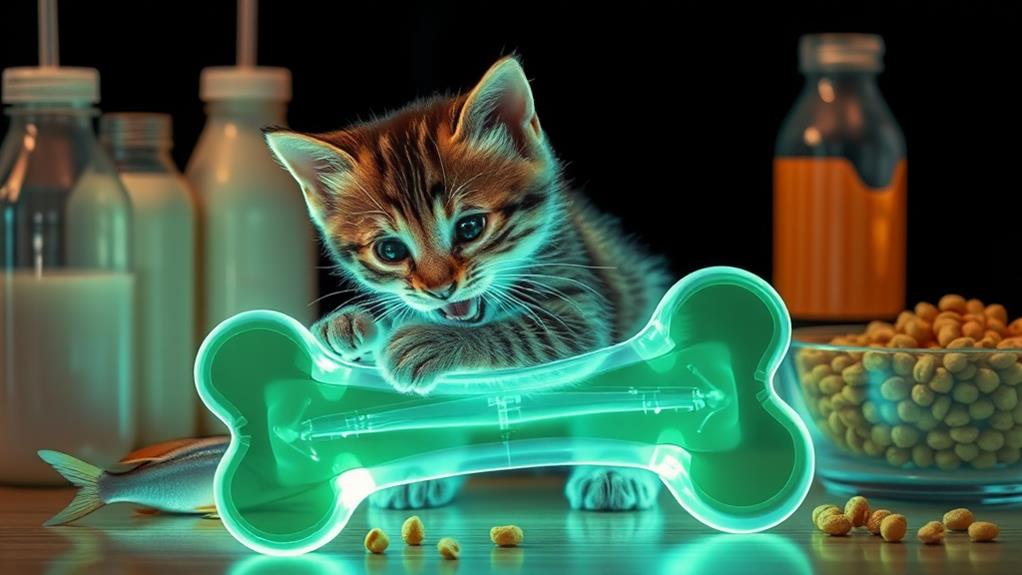
Now that we’ve covered vitamins, let’s focus on another key group of nutrients: minerals. For our little furballs, calcium and phosphorus are the superstars of the mineral world. These dynamic duo work together to build strong bones and teeth, which are critical during a kitten’s rapid growth phase. We’re talking about a balanced ratio of about 1.2:1 calcium to phosphorus to keep those tiny skeletons in tip-top shape.
But wait, there’s more! Trace minerals like magnesium, manganese, and zinc also play essential roles in healthy development. Without these minerals, our kittens could face skeletal deformities and other health issues. That’s why it’s important to feed them a diet specifically formulated for kittens, which contains all the necessary minerals in the right proportions. By doing so, we’re setting them up for a lifetime of purr-fect health!
Recommended Products

ALL-NATURAL FROZEN RAW DOG FOOD AND CAT FOOD: Raw Paws dog food roll is a grain free beef dog food with mackerel for the added benefit of omega 3 fish oil for dogs and cats! We source our all-natural beef dogs and cats crave from free-range cows raised without the use of antibiotics or added hormones, from family farms in Indiana. The mackerel, rich in fish oil for cats, dogs and ferrets, supports skin and coat health, is wild-caught from the cold, fresh waters of Alaska.

Hill's Prescription Diet c/d Multicare Stress Urinary Care with Chicken Dry cat food is specially formulated by Hill’s nutritionists and veterinarians to support your cat’s urinary health

Our chitosan-based phosphate binder is highly-palatable & supports renal function in dogs & cats
Taurine: Supporting Heart and Vision
Moving on to another fundamental nutrient, we can’t overlook taurine’s significant role in kitten development. This amino acid is essential for healthy heart function and vision in our feline friends. Kittens’ bodies can’t produce enough taurine on their own, so it’s imperative to guarantee their diet contains sufficient amounts of this nutrient during their rapid growth phase.
Let’s explore why taurine is so important for kittens:
- Supports proper heart development and function
- Aids in the formation of healthy eyes and maintains vision
- Prevents serious health issues like dilated cardiomyopathy and retinal degeneration
To keep our kittens thriving, we need to provide them with high-quality food that contains at least 0.1% taurine on a dry matter basis. Animal-based proteins, such as those found in meat and fish, are excellent sources of this fundamental nutrient.
Water: Hydration for Overall Health
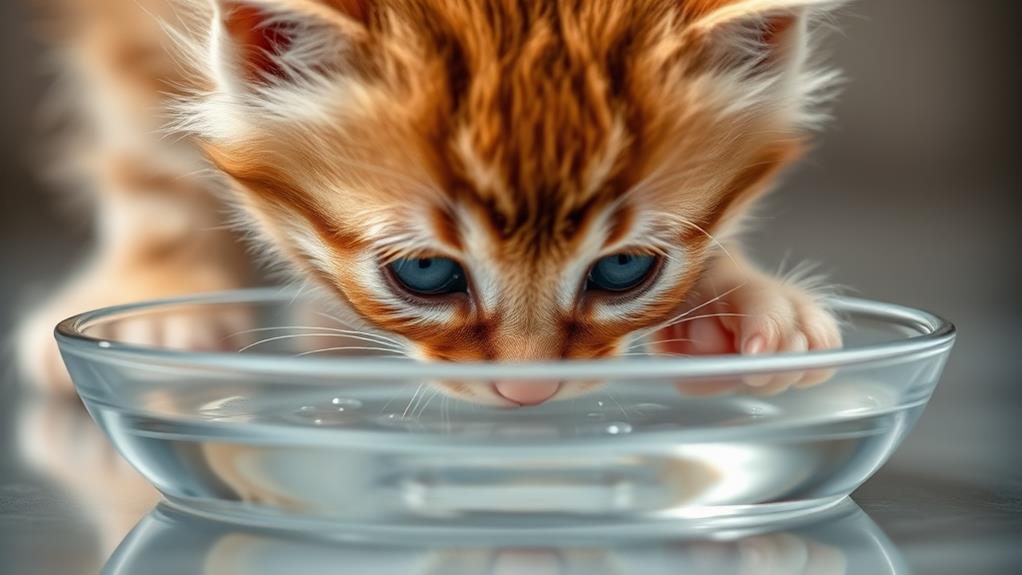
We can’t overstate the importance of water in a kitten’s diet. It’s the unsung hero of healthy development, playing a significant role in nutrient absorption and metabolic processes. Without proper hydration, kittens can face serious health issues that could hinder their growth and well-being.
As freedom-loving cat parents, we need to guarantee our furry friends have constant access to fresh, clean water. Remember, kittens need more water than adult cats relative to their body weight, so don’t skimp on this essential nutrient. While wet food contributes to their hydration, it’s not enough on its own. Keep an eye on your kitten’s water intake, especially during hot weather or after playtime. By prioritizing hydration, we’re setting our kittens up for a lifetime of health and well-being.
Carbohydrates: Digestible Energy Sources
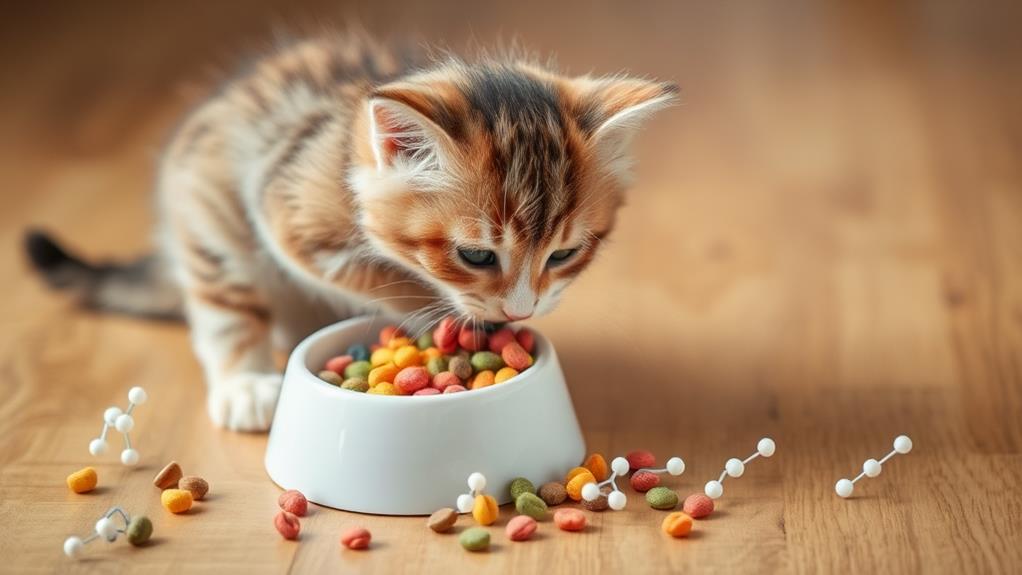
While many cat owners focus primarily on protein, carbohydrates play an essential role in a kitten’s diet. These digestible energy sources are vital for supporting rapid growth and high activity levels during early development stages. We recommend including carbohydrates as 10-15% of a kitten’s diet, providing necessary energy without overwhelming their immature digestive systems.
Easily digestible carbohydrates found in high-quality kitten food offer several benefits:
- Support gastrointestinal health
- Aid in nutrient absorption
- Enhance overall energy availability
Despite cats being obligate carnivores, incorporating a small percentage of carbohydrates contributes to peak growth without compromising protein needs. This balanced approach guarantees kittens receive the right mix of nutrients for healthy development. By understanding the importance of carbohydrates in a kitten’s diet, we can better support their nutritional needs and set them up for a vibrant, energetic life.
Frequently Asked Questions
What Are the Nutritional Needs of a Kitten?
We’ve gotta focus on kitten feeding tailored to their growth stages. High-protein sources, proper hydration, and specialized kitten formulas are key. Don’t forget digestive health and weight management. Dietary supplements might be needed for ideal development.
What Is the Best Nutrition for Kittens?
Don’t fret about complex diets! We’re here to assist you. For kittens, we recommend high-quality kitten food, wet or kibble. Consider growth stages when planning feeding schedules and portions. Raw or homemade diets? Consult a vet for needed supplements.
What Vitamins Are Good for Kittens Growth?
We’ve got the scoop on kitten growth vitamins! Vitamin A benefits vision, D’s essential for calcium absorption, E’s found in fish oils, C boosts immunity. Don’t forget B vitamins, taurine, and omega fatty acids for your feline’s wild development!
How Can I Make My Kitten Grow Healthy?
Let’s raise a healthy kitten together! We’ll focus on proper feeding, tracking growth milestones, and encouraging play. We’ll socialize them, provide safe toys, and maintain grooming routines. Don’t forget regular checkups and keeping them hydrated. Freedom to thrive!